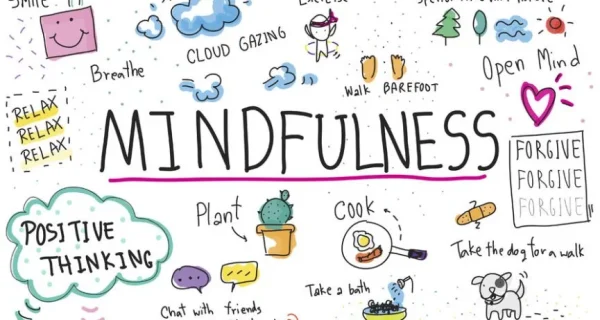


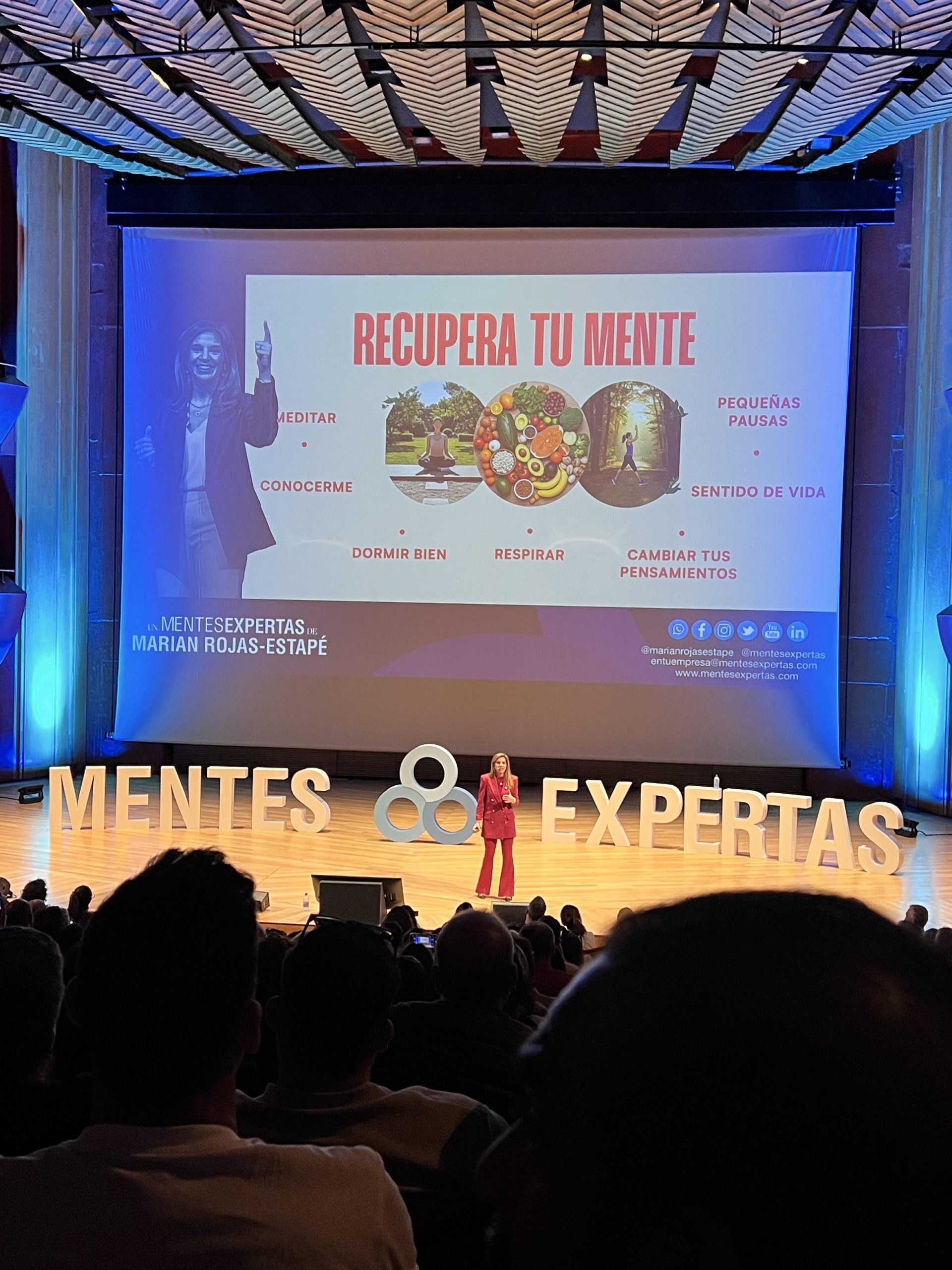
As a mindfulness coach and trainer, I support many people who come to my programs with a common feeling: they live disconnected from themselves, trapped between a past that weighs heavily and a future that causes anxiety. That is why, whenever I listen to professionals like Marian Rojas, I feel that her message deeply resonates with what I see every day in my workshops and sessions.
«“True well-being begins when we learn to come back to the present moment.”«
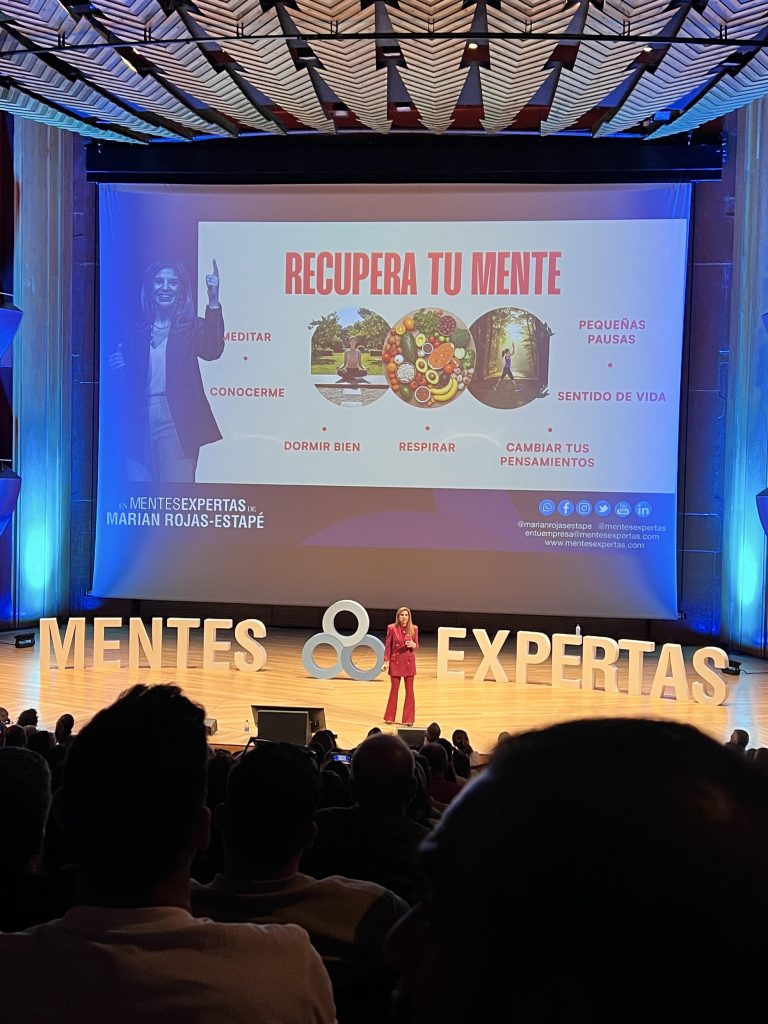
In this talk, Marian shared insights that confirm that happiness is not something we search for outside ourselves, but something we cultivate within. Here I share a summary of the most valuable points, integrated from my perspective of guidance and daily practice.
Happiness can only happen in the now
Happiness can only be experienced in the present moment. The past often brings memories or trauma, and the future triggers anxiety about what might happen. Connecting with the here and now is essential to enjoy what comes and to handle difficulties from a more conscious and less reactive place.
Expectations, meaning, and the importance of pausing:
Marian emphasized that happiness is closely linked to our expectations and to the meaning we give to life.To find that meaning, it is essential to slow down and pause,o create spaces of silence where we can ask ourselves:
What truly moves and motivates me today?
What do I need?
Where is it I want to go and head towards?
This act of stopping also opens the door to an essential tool: getting to know and relate with our inner voice.Is it a critical voice that limits us, or a constructive voice that supports us? The way we tell ourselves things—even before they happen—has a direct impact on our health, our attitude, and the way we experience life.
Cortisol: living intoxicated by alertness
One of the central points of the talk was the role of cortisol, the stress hormone. Today we live in a society intoxicated by cortisol and adrenaline, in a constant state of alertness. Cortisol is activated not only by real dangers, but also by emotional survival: fear of rejection, abandonment, or even with the feeling of loneliness.
Marian shared a striking fact:
90% of the things we worry about never actually happen!
Yet our bodies react as if they were real.
This toxic and sustained stress affects:
- The immune system
- The microbiome
- The skin
- Mood
- Attention span
-And it blocks the prefrontal cortex, the area of the brain that helps us pause, gain perspective, empathize, self-regulate, and understand ourselves.
Childhood also plays a role: trauma activates alert mechanisms that, if not addressed, continue into adulthood.
Mindfulness as a antidote
Mindfulness used for brain training
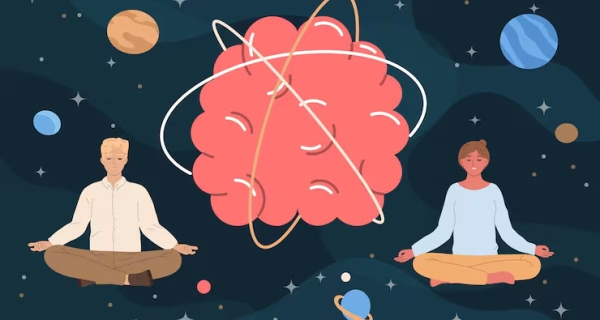
The good news: the prefrontal cortex can be trained. Meditation and mindfulness practices, supported by scientific research, help strengthen it. I see this every day in my groups and programs: when people train their attention, everything changes. Their calm, clarity, and ability to respond instead of react are transformed.
The dopamine era: immediate pleasure and divided attention
Another key concept was dopamine intoxication. Marian explained how we constantly seek pleasure to avoid pain, and how social media has become “the new drug that enters through the eyes.”
The brain remembers what calms it or gives it a quick reward. That’s why, when bored or stressed, we automatically turn to our phones. This constant search for stimulation reduces prefrontal cortex activity and contributes to the attention crisis, and therefore to increased cortisol and stress in our lives.
Spirituality: our grand relief
Marian also spoke about the spiritual dimension as a deep source of calm. Connecting with something greater—whether faith, purpose, nature, or gratitude—reduces anxiety and gives broader meaning to what we experience.
In my experience, when meditation includes a spiritual element, personal transformation becomes lighter and more meaningful.
Oxytocin: returning to love
Oxytocin, the hormone of bonding, balances stress and opens the door to calm. A 10-second hug with a “vitamin person” has real neurobiological power.
As Marian concluded: what saves us is love. Returning to affection, to hugs, to laughter, and to what is essentially human.

✨ Would you like to learn how to regulate your mind, reduce stress, and return to the present moment?
I invite you to be part of my Mindfulness and Coaching programs, where we work with these tools in a practical, human, and transformative way.
👉 Write to me if you’d like more information or to reserve your place.
👉 You can also join my 9-week MBW program to transform your well-being from within.
Returning to the present moment is returning to yourself. I’m here to support you whenever you’re ready.